How did you get started in the joinery industry? What led you to specialise in finishing?
I’ve been spraying for 30 years now, but I didn’t start in joinery. I was working in roofing when I went to help a friend strip paint off some doors. It was meant to be for just two weeks, but he liked my work and offered me a more permanent job.
I got started with the basics: stripping, sanding, priming, sanding again – there’s a lot of sanding involved. Learning and understanding every step of the preparation process is what sets you up for success as a finishing specialist. Over time, as projects grew in scale, I grew with them and ended up moving on to another joinery company that was handling bigger projects. I was in my late 20s when I started mastering top-coating and lacquering and that’s when the finishing process really sparked something in me. I loved the transformation from sanded joinery sitting into a high-end finished piece.
What are you most passionate about in your role?
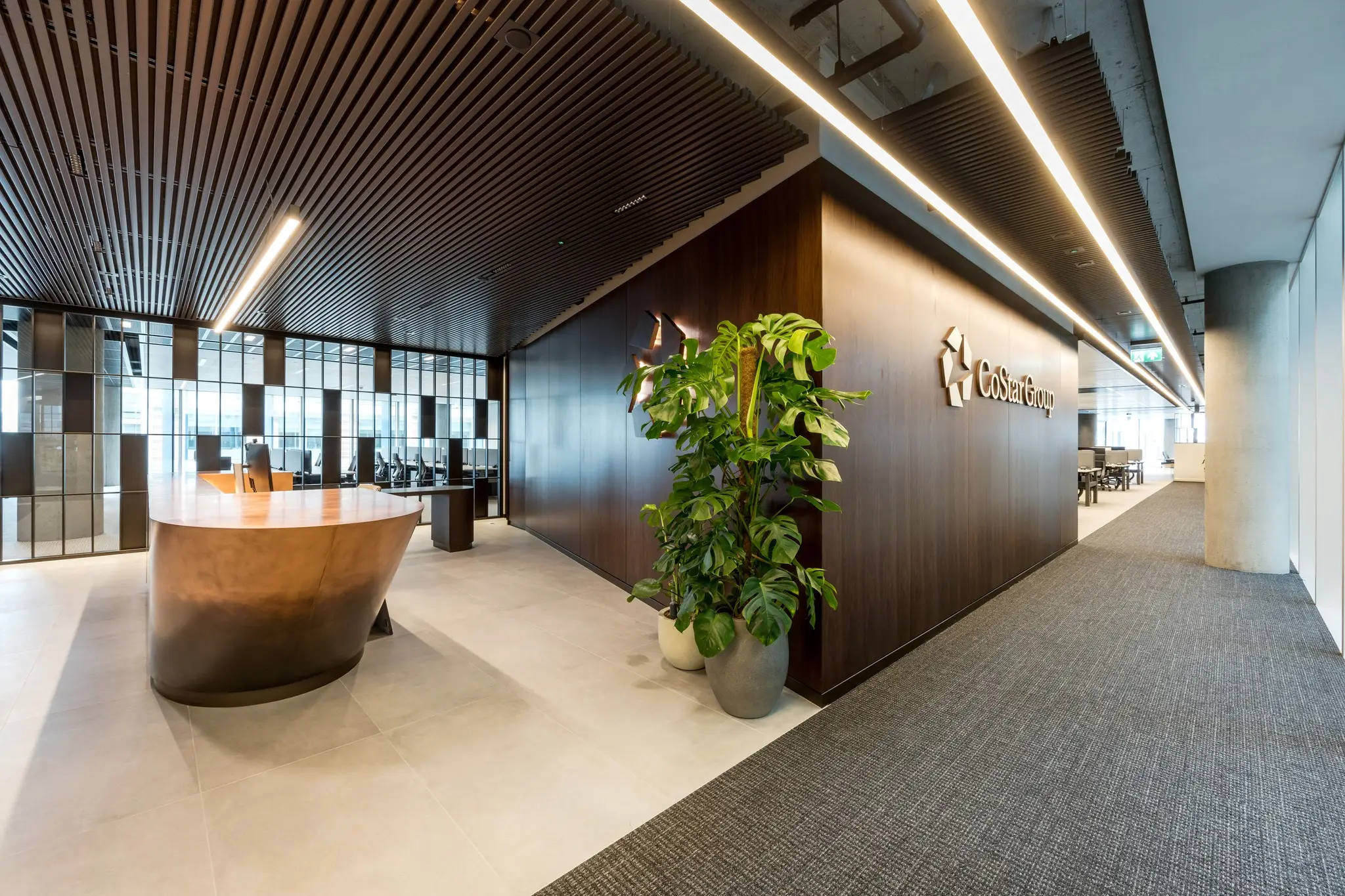
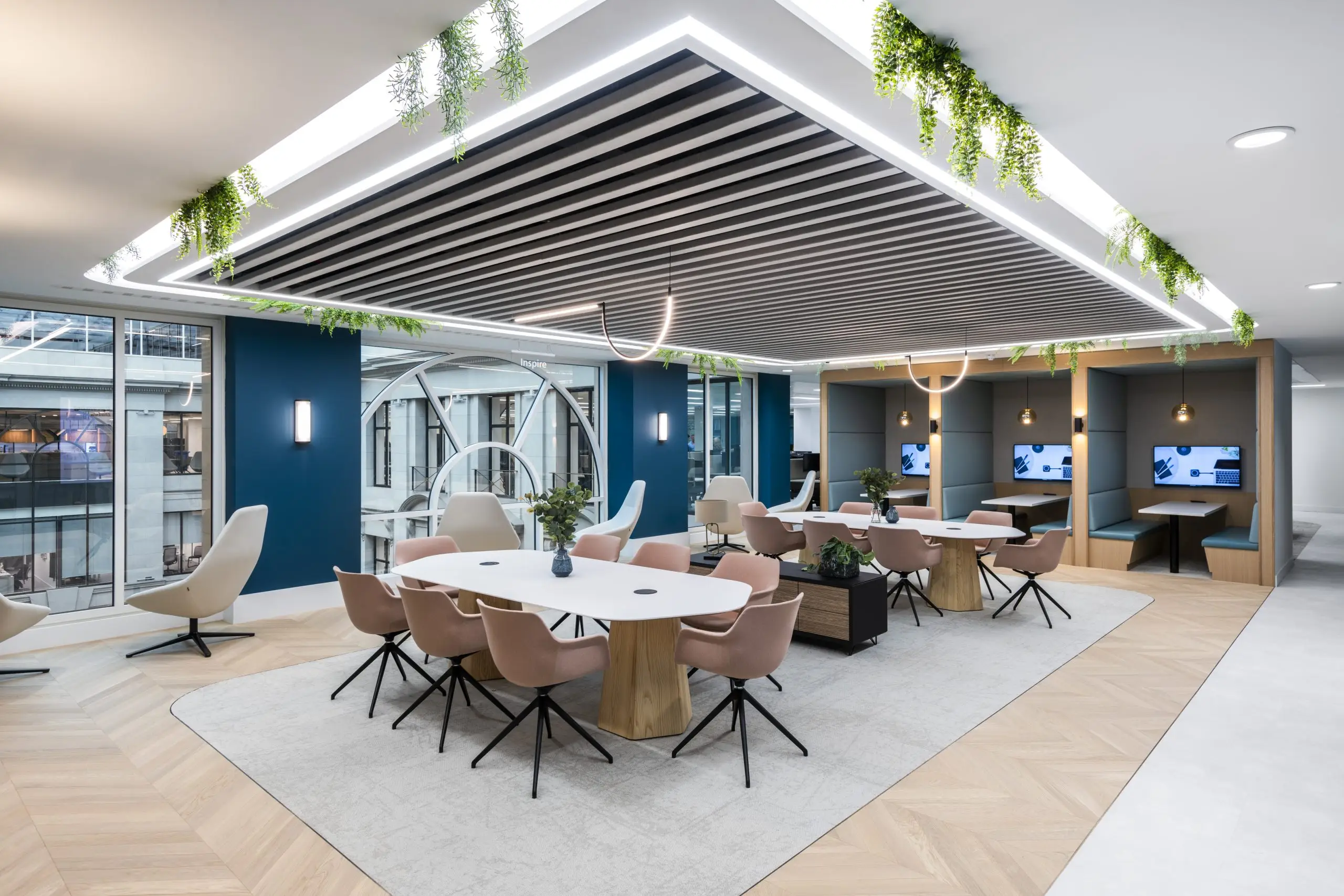
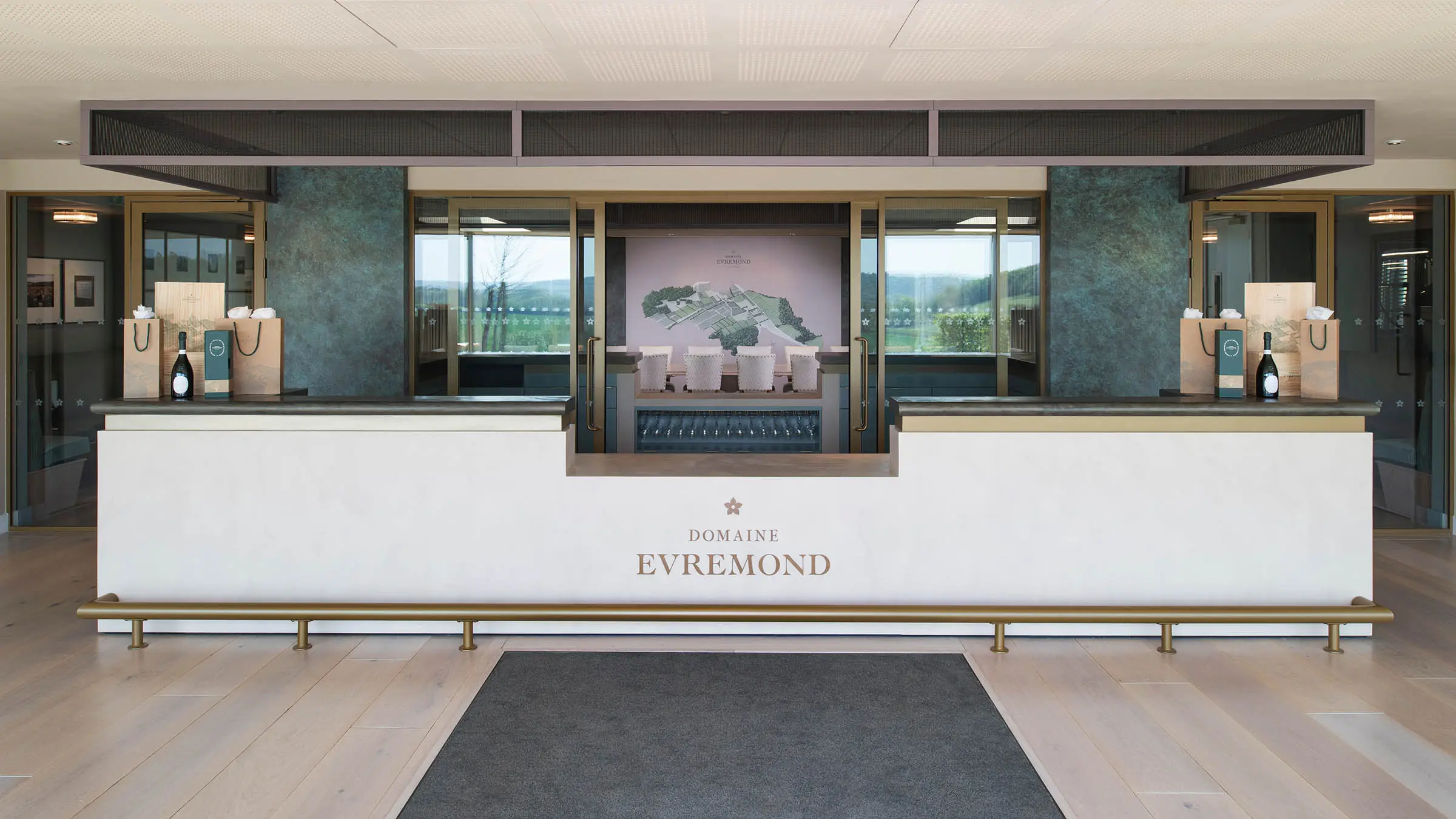
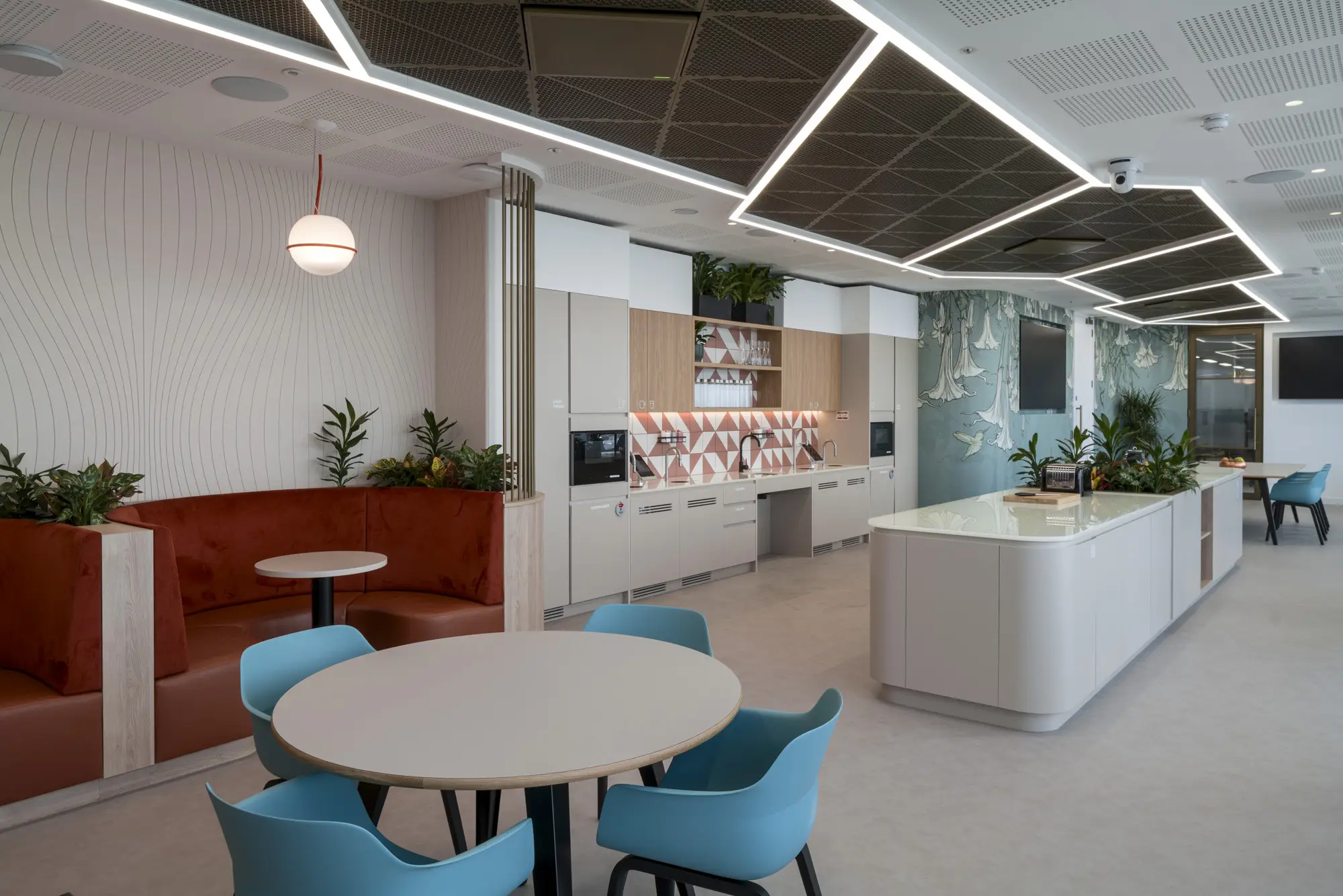
Seeing a stunning piece of joinery that has been transformed. Having in-house facilities at Denne Joinery allows me to see the whole journey, from manufacturing through to the final finish. In commercial joinery as opposed to residential, it’s also easier to see our bespoke joinery installed on site, as companies usually document the final results.
That’s a proud moment. When you see the joinery in a completed space, you realise the impact the finish has on the whole project.
Have you got any preferred finishes to work with, and why?
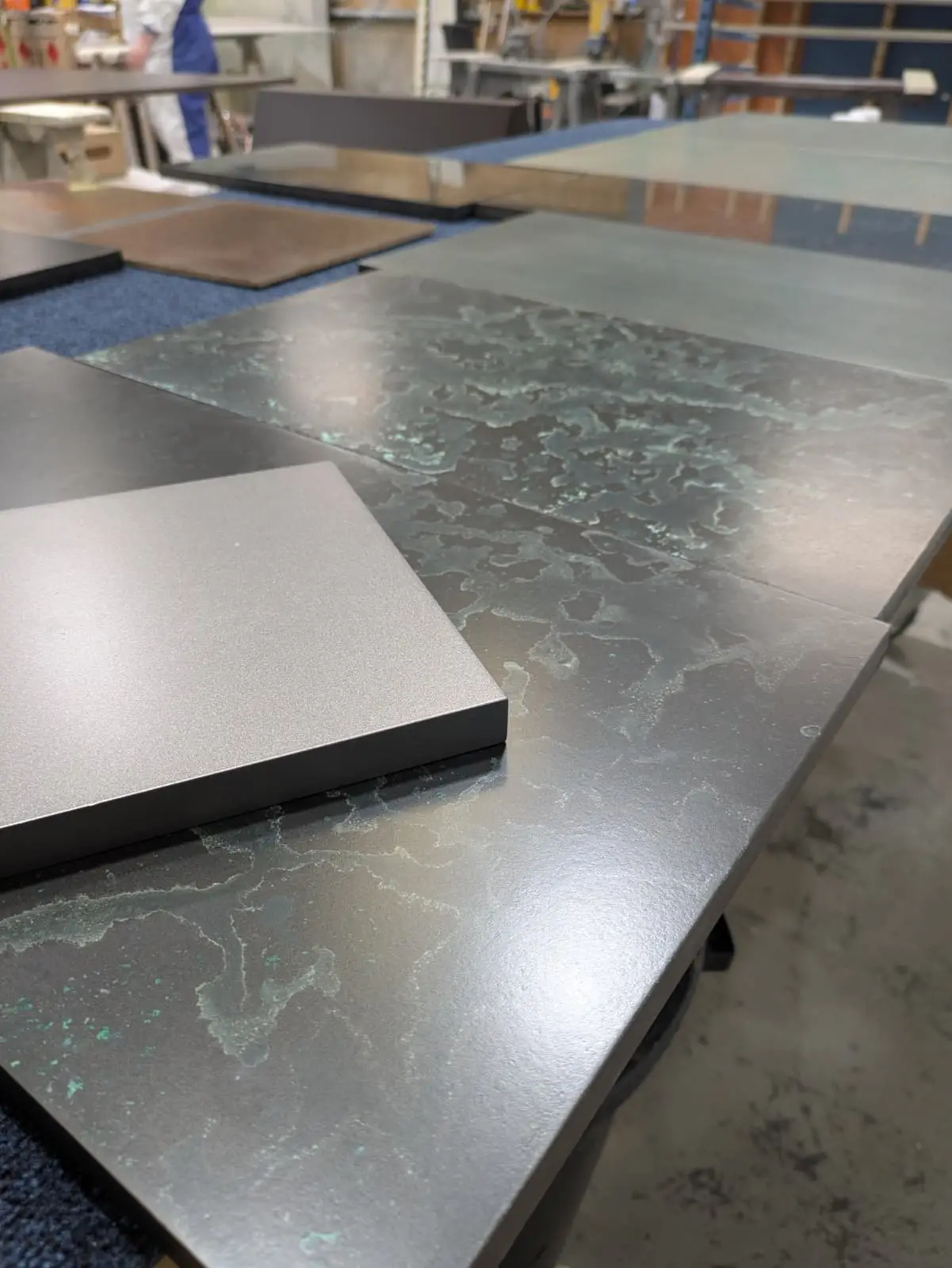
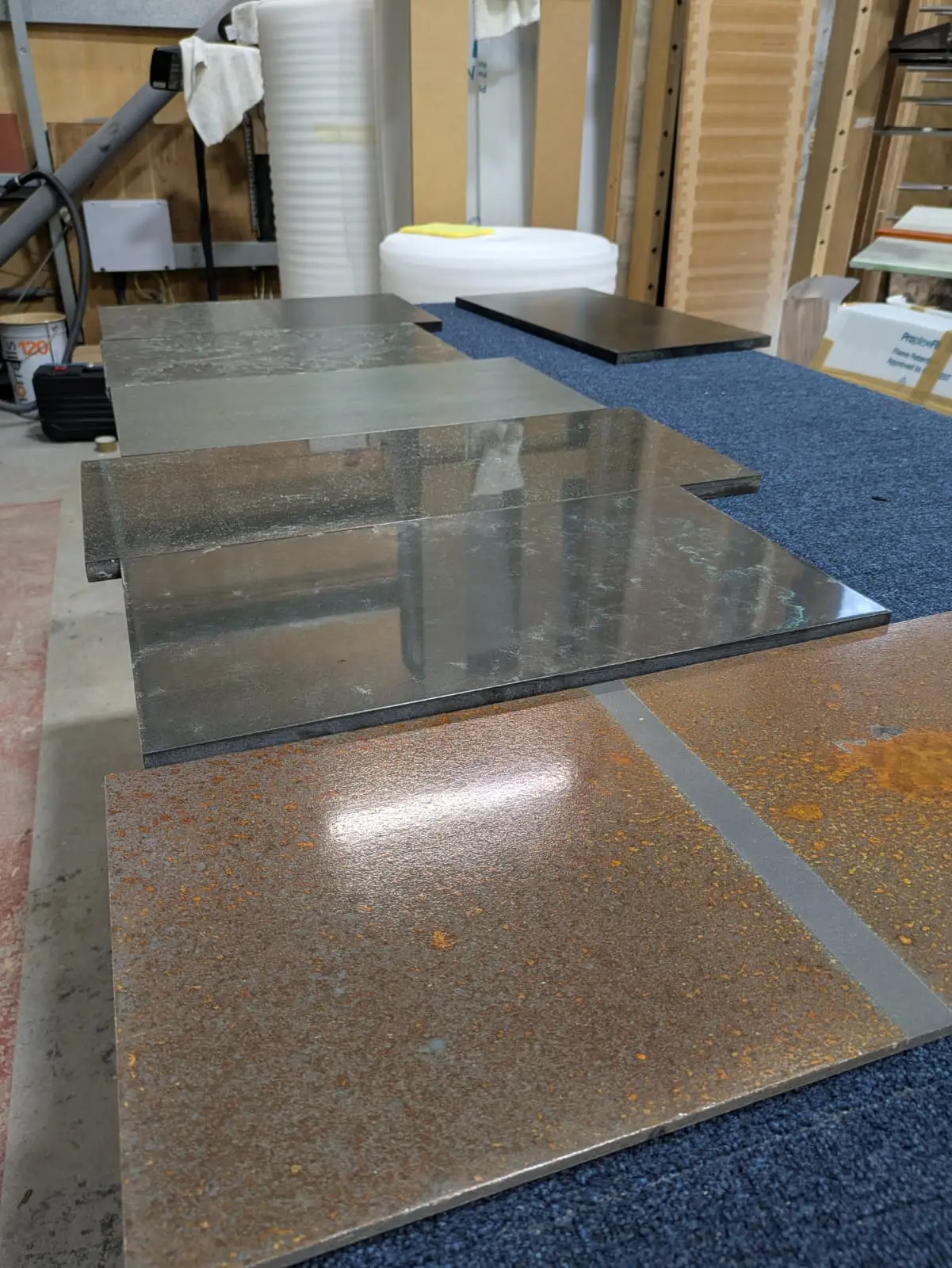
Metallic finishes are my favourite at the moment. They’re relatively new and they’re truly exceptional. You can take a simple MDF board and turn it into something that looks like solid metal. The darker bronze tones are genuinely stunning. When the light catches them, they sparkle almost like a night sky.
Bright colours like orange or blue are also very satisfying to get right. They’re far more complex than people think. While the process is similar to that of other colours, brighter pigments demand much more work to achieve a solid, even finish. The outcome depends heavily on the base colour. If the base is white, it’s easier. If the base is a clear colour but not white, it takes absolute precision to build the necessary depth.
We also work with highly specialised lacquers, paints and primers. Traditional spirit-based lacquers had a distinctive golden tint, but they came with environmental and health and safety issues. That’s why we have been using water-based lacquers for years now, as they are much better for our team and the environment.
However, one of the challenges of these water-based lacquers is that they can sometimes create a cloudy, milky effect. Recently, we’ve been working with new water-based lacquers engineered specifically to replicate that richness and golden tint. The results have been exceptional.
How do you prepare surfaces before spraying? Tell us about the key steps to achieve the perfect finish.
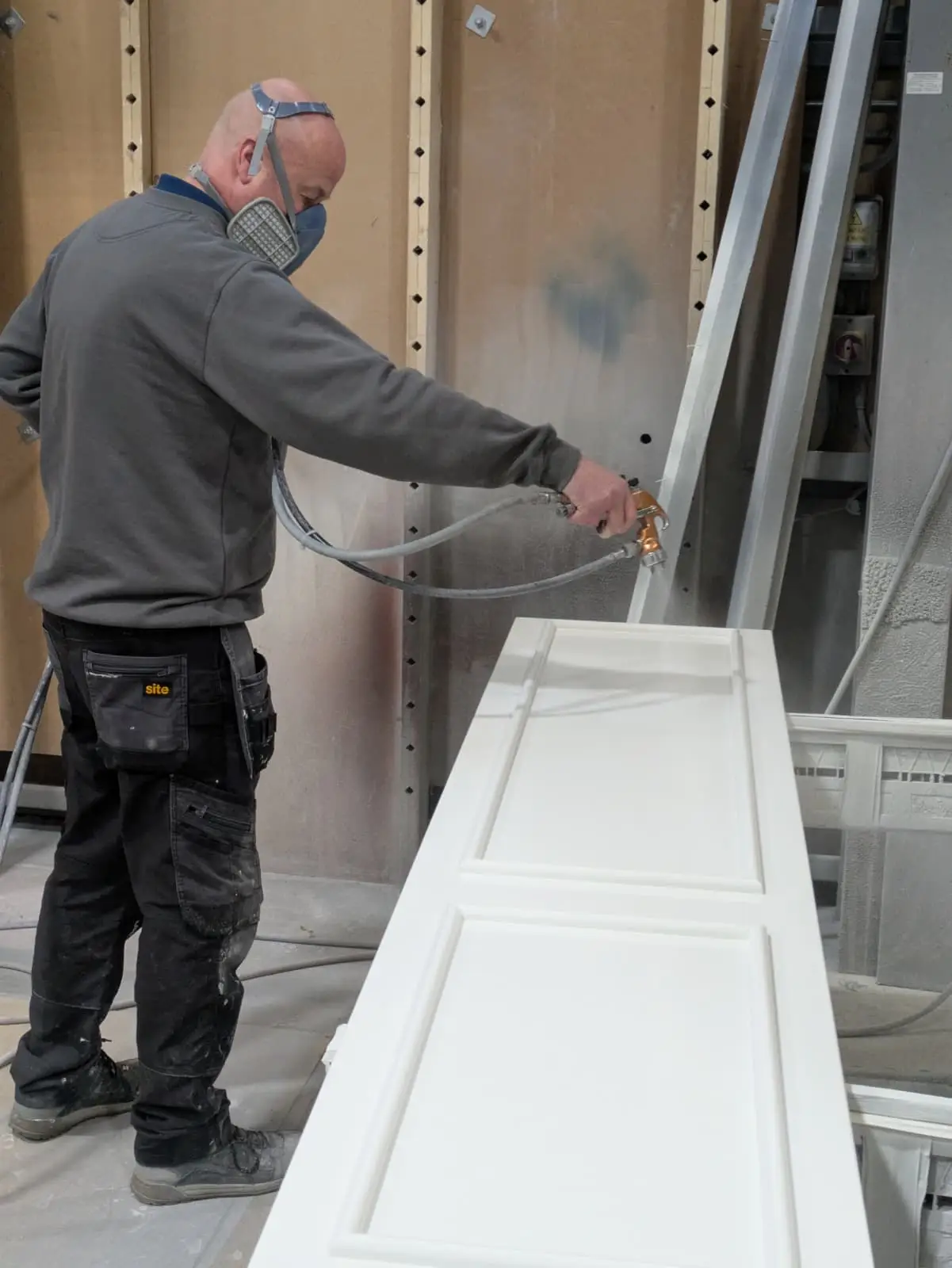
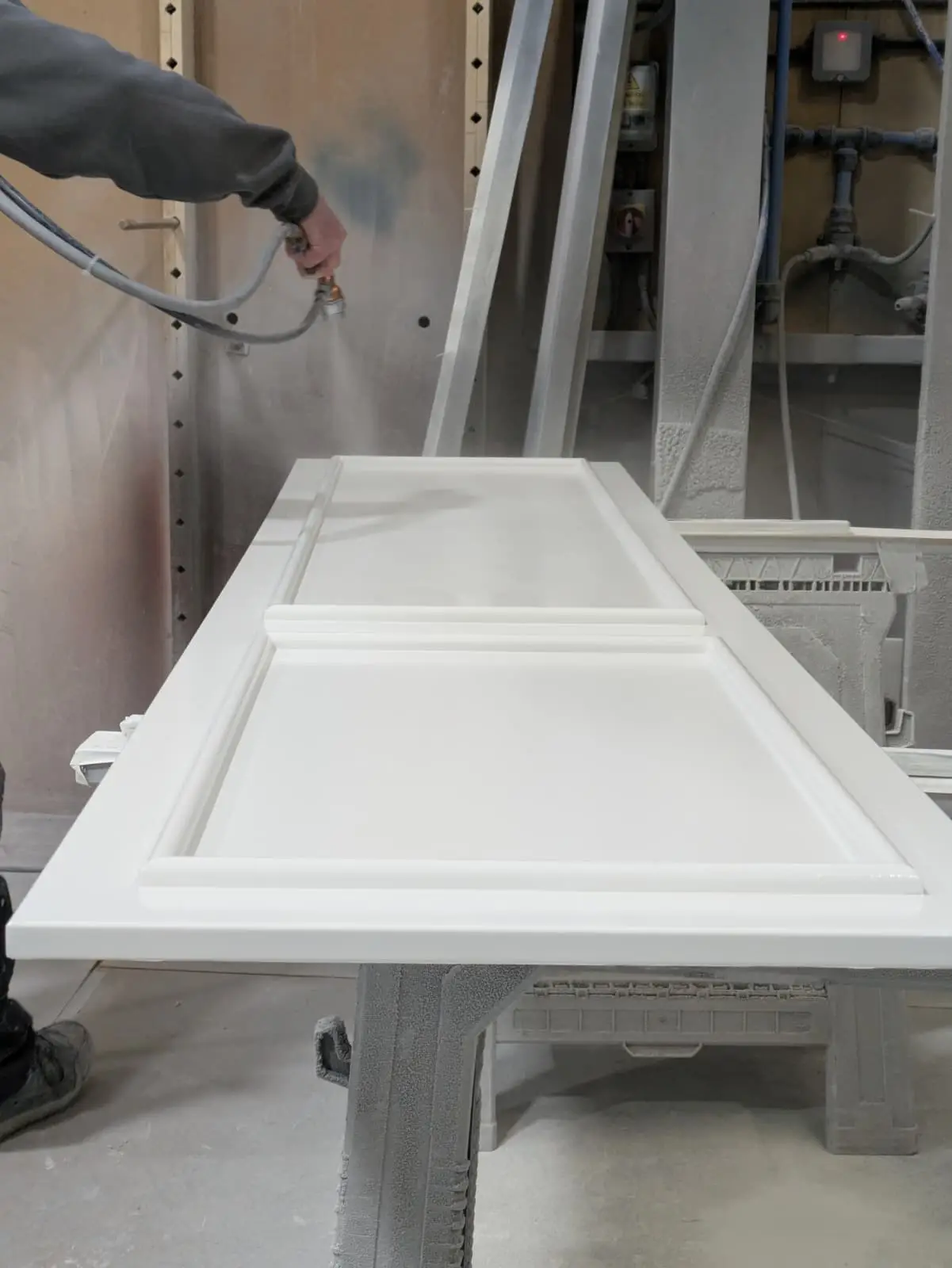
The joinery arrives cleaned up from the workshop. We apply the first coat, sand it back, then apply a second coat of lacquer or primer. After that, it’s sanded again and prepared for the top coat. Achieving a flawless result sometimes means trialling different techniques to see what works best for each type of finish. Along the way, we fill any tiny cracks or imperfections between coats.
We rely heavily on our senses. Your eyes are important, but touch is key. Running your hand over a surface tells you instantly if something isn’t perfect. Experience plays a huge role as well, knowing what to look for and how to fix it before it becomes visible in the final finish. The perfect finish isn’t rushed; it’s built layer by layer.
What’s the most technically challenging finish you’ve delivered?
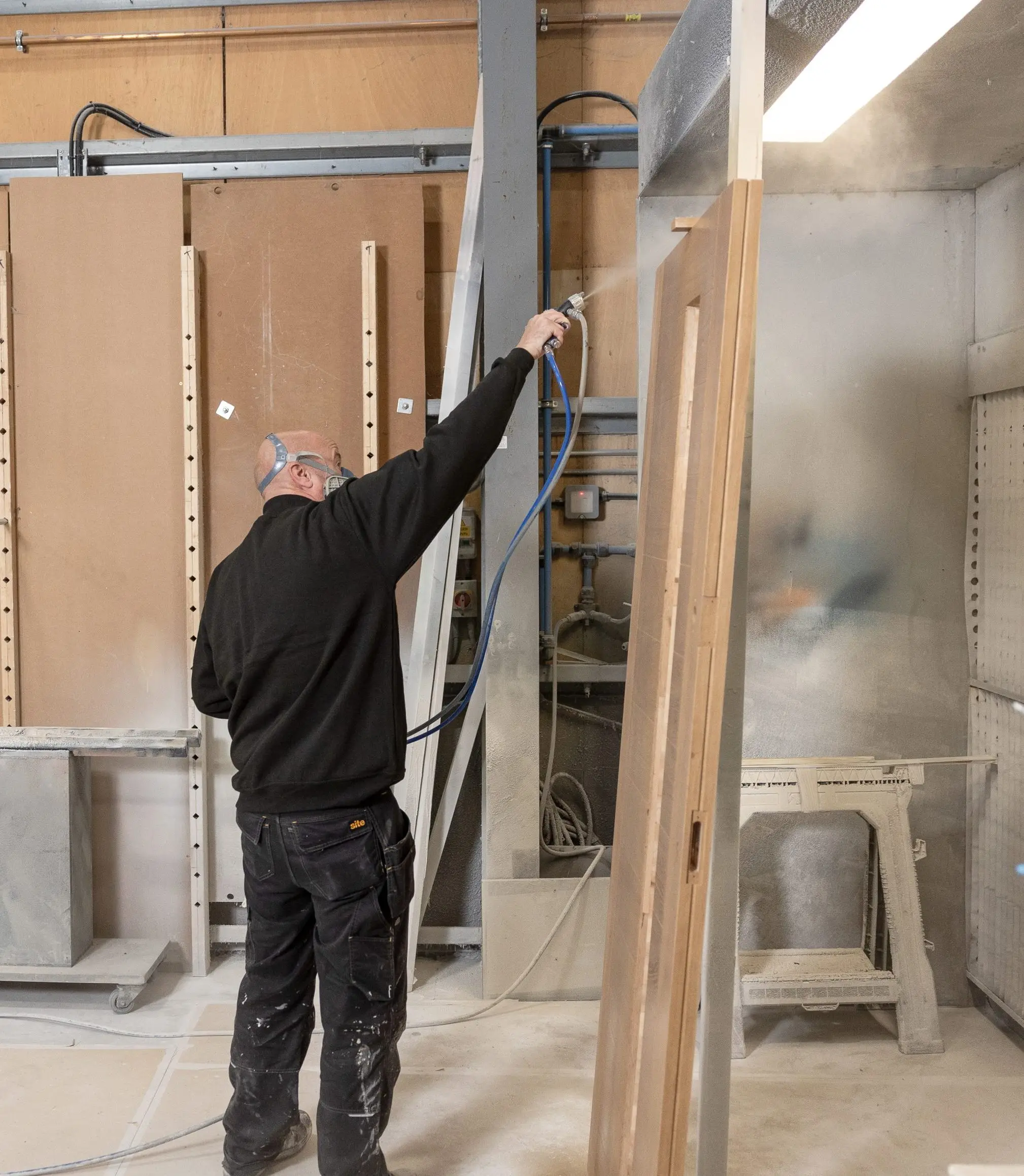
I worked with fire-rated lacquer on cherry timber a few years ago and it was one of the toughest. Cherry isn’t very forgiving. You need to be very precise because you have to get it right the first time. The newer metallic finishes can also be challenging. You have to adapt your spraying technique carefully so there aren’t any heavier patches. It requires focus and consistency. But that challenge is what makes the process so rewarding and what elevates the quality of the bespoke joinery we create.